Lifecycle

One of the guiding values of the Brith Sholom mission statement is that we celebrate and support each other throughout life’s journey. From birth to the end of life and everything in between, we regard ourselves as one big family.

Our traditions range from marking Jewish religious life-cycle moments (Brit Milah, Simchat Bat, Bar/Bat Mitzvah, Aufrufs and weddings, levayot(funerals), yahrzeits, and unveilings) to more contemporary customs like birthday calls from Rabbi Singer, Love Shabbat (Tu B’Av), dancing on wedding anniversaries, Adult B’nei Mitzvah, and Lech Lecha ceremonies for our graduating High School seniors.

Whether it’s sponsoring a special Kiddush lunch, getting called for an aliyah, chanting the Haftarah and having candy thrown, being serenaded and blessed on the bimah, taking comfort from a seudah havra’ah (meal of consolation) or shiva minyan, we come together as a community to make the joyous moments sweeter and the difficult ones a little less painful.

Brit Milah

Since our ancestor Abraham, we have welcomed baby boys at 8 days old into the Covenant (Brit) with the ceremony of brit milah (circumcision). Many wonderful traditions make up this ceremony, including the baby greeters (kvater/kvaterin), Elijah’s chair, the sandek (baby holder), the giving of the baby boy’s name, and the blessings for mother and child. Rabbi Singer keeps an updated list of certified mohelim. The ceremony is followed by a festive kosher meal.

Simchat Bat

If the Brit Milah welcomes baby boys, then the Simchat Bat (Joy in a Daughter) ceremony welcomes baby girls into the Covenant. Originally just a naming ceremony with an aliyah at the Torah, the Simchat Bat at Brith Sholom has grown to be a beautiful tallit ceremony, wrapping mom and baby in the canopy of mitzvot. From the baby greeters (kvater/kvaterin), blessings from family members, to the wrapping of a tallit, the giving of the baby girl’s name, and the festive kosher meal that follows, we sing for joy at the Simchat Bat.

Bar/Bat Mitzvah

Let’s face it, thirteen can be a challenging age. Caught between needing your parents and wanting more freedom and independence from them is not an easy moment to navigate. Add in social pressures, schoolwork, and meeting everyone’s “expectations,” and so becoming bar/bat mitzvah could be another stressor.

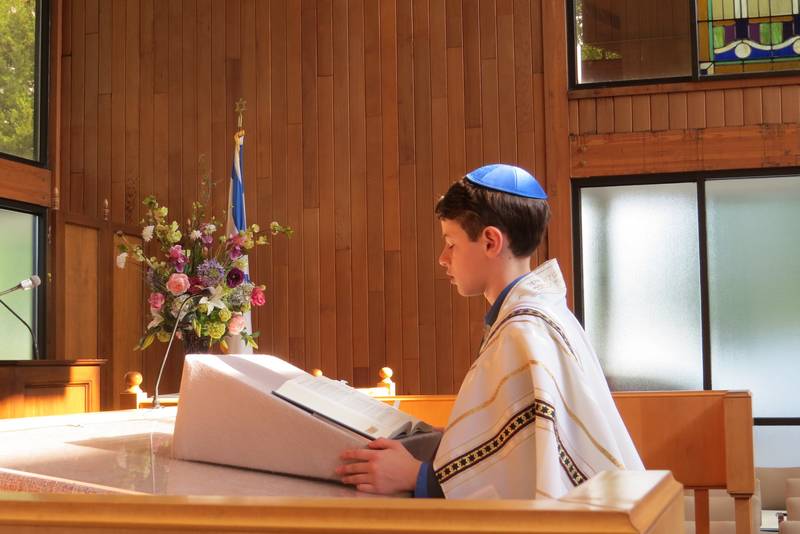
But at Brith Sholom, that’s not what it’s about. We start learning to read Torah in 5th grade, and there are plenty of opportunities to read and lead our services on Shabbat. Students are expected to be enrolled either at JDS (Jewish Day School) or in our joint Religious School. From learning how to put on tallit and teffilin to chanting their Haftarah, Rabbi Singer works with each teen individually to highlight their strengths, and the relationships formed last forever.

The bar/bat mitzvah is the beginning of Jewish adulthood, so we fully expect our young adults to continue to read, lead, and participate fully in Jewish life. After all, the bar/bat mitzvah ceremony is a public declaration of, “Look out, world, I’m proudly Jewish, knowledgeable about my faith, and a rising star (of David)!”

Lech Lecha

We absolutely love to celebrate our young adults, and high school graduation is a moment of celebration and aspiration. For graduates – and for parents – a new life is beginning. In the Torah, God commands Abram and Sarai to leave their ancestral home and lech lecha (Go forth!). God promises to be with them in the next step of their journey and blesses them. We do the same at Brith Sholom. We congratulate all of our students, have parents bless them, and give them a special mezuzah to mark the start of their new journey.

Conversion (Adults & Children)

At Brith Sholom, around 20% of our members are Jews by Choice. We not only welcome spiritual seekers, we also embrace them into our Brith Sholom family. The conversion requires dedication and authentic commitment to mitzvot and, at a minimum, a year of study. Rabbi Singer oversees the curriculum of learning Hebrew, Tefillot (Prayers), Jewish Holidays, Life-cycle, Sacred objects and spaces, Jewish historical overview, and important theological concepts. Those in the conversion process are welcome to participate in all religious services, holidays, life-cycle events, social events, and may volunteer on synagogue committees.

When ready, candidates will submit essays, ensure circumcision or hatafat dam brit (men only), and schedule a date with the Beit Din (court of 3 rabbis). With the Beit Din’s blessing, they will immerse in our Lehigh Valley community mikvah (ritual bath) and receive their new Hebrew name. The celebration continues at the synagogue with an aliyah at the Torah.

We also have many children (adoption, single Jewish parent, etc.) who undergo an easy and simpler conversion process – from babies to young teens. In most cases, in order to attend either the JDS or our joint Religious School, the process must be completed before entering.